
Transcript
Announcer:
This is Project Oncology on ReachMD, and this episode is sponsored by Bristol Myers Squibb. Here’s your host, Dr. Steve Jackson.
Dr. Jackson:
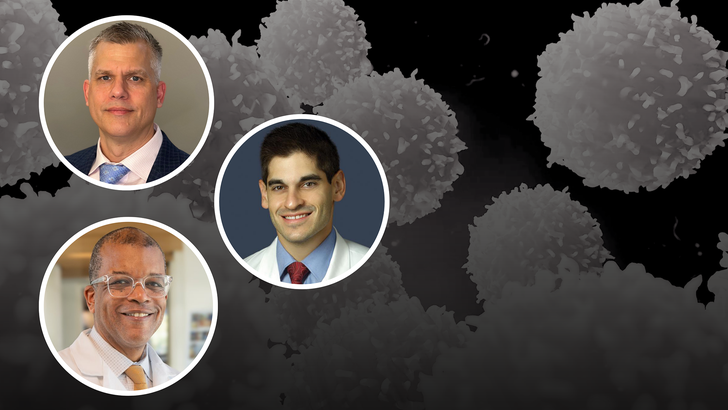
This is Project Oncology on ReachMD, and I'm Dr. Steve Jackson. Joining me to talk about how we can optimize multidisciplinary collaboration when implementing perioperative immunotherapy strategies in non-small cell lung cancer are Drs. Joshua Reuss and David Cooke.
Not only is Dr. Reuss a thoracic medical oncologist at MedStar Georgetown University Hospital, but he also serves as an Assistant Professor in the Department of Medicine at Georgetown University Medical Center. Dr. Reuss, thanks for being here today.
Dr. Reuss:
Thank you, Steve. Happy to be here to have this important discussion on a topic that’s near and dear to my heart.
Dr. Jackson:
And Dr. Cooke is a physician-in-chief at the UC Davis Comprehensive Cancer Center, as well as a Professor and the Founding Chief of the Division of General Thoracic Surgery at UC Davis Health. Dr. Cooke, welcome to the program.
Dr. Cooke:
Thank you very much, Steve, for this kind invite, and I'm looking forward to this conversation with you and Joshua.
Dr. Jackson:
So why don't we start with you, David. As perioperative immunotherapy becomes more integrated into non-small cell lung cancer care, how has your approach to determining resectability evolved in collaboration with oncology?
Dr. Cooke:
Yes, so we're at a very exciting time for the treatment of a patient with lung cancer. There are multiple opportunities for us to restore that patient's health. We have checkpoint inhibitors and targeted therapy and their integration with surgery for early-stage disease and locally advanced stage disease.
But the important thing is the concept of intention to treat. So when we look at a patient, we determine if that patient can undergo what we call an R0 resection. So an R0 resection means that we remove the part of the lung with the tumor, and to the best of our knowledge via visual acuity and via histology, there's no cancer left behind; there's no positive margin. Now, that might require a sub-lobar resection, so a wedge or segmentectomy, a lobectomy—so an entire lobe—or a pneumonectomy—the entire lung. So when you're looking at a patient's imaging and functionality, regardless of what adjuncts you may have available to you such as checkpoint inhibitors and targeted therapy, can you remove the cancer or not in a safe manner?
If you cannot, you really shouldn't be viewing systemic therapy as a way to make a patient operable. That's just delaying standard-of-care treatment. That patient should go for more definitive non-operable therapy. But if a patient is operable, then you make that next step. Will they benefit from neoadjuvant checkpoint inhibitor or targeted therapy? Or would they most likely benefit from adjuvant—so after surgery—checkpoint inhibitor or targeted therapy?
Dr. Jackson:
And from your perspective, Josh, what factors are most important when deciding which patients are appropriate for perioperative immunotherapy strategies?
Dr. Reuss:
Yeah, absolutely. And I agree with David here—I lean heavily on my surgical colleagues for determining resectability and operability.
But regarding factors for me, I think obviously you want to know disease stage, and so you need to do that with invasive mediastinal staging for pathologic assessment. If someone comes in and they have a lung lesion or perhaps an enlarged lymph node and PET scan shows there's nothing distant and the MRI of the brain is negative, you don't just want to biopsy that primary lesion with a CT-guided approach. You want to take an invasive, typically with interventional pulmonary colleagues, and do a biopsy of the lung lesion and stage the mediastinum.
So those are important, but then also I definitely need to know the molecular status of the patient—what we call comprehensive next-generation sequencing, or NGS testing. This has been the standard in the setting of advanced non-small cell lung cancer, particularly adenocarcinoma, but in squamous as well, this can be helpful. And so that's been our standard in the advanced disease setting for quite some time. But it is now, I would say, as important in the locally advanced unresectable and the potentially resectable case because knowing the status of what we call so-called driver mutations—our mutations in EGFR, ALK, RET, ROS1, etc.—knowing that will help inform whether or not we think upfront chemoimmunotherapy will have a role or not. So really assessing those molecular alterations before starting on a systemic therapy is critically important because a lot of these alterations—EGFR and ALK are our flagship examples—where we know immunotherapy-based treatments aren't effective typically in the setting of treatment-naive disease.
And not only that, but we now have approved targeted therapies in the adjuvant space. So if someone could go to surgery upfront, even with lymph nodes involved, I’d probably be more likely to send them over to David for that resection if they have an EGFR or ALK alteration. If they don't, I would want to deploy a chemoimmunotherapy-based approach.
Dr. Jackson:
Now, David, surgical timing has become more complex with neoadjuvant immunotherapy. How do you coordinate the optimal timing of surgery after systemic treatment?
Dr. Cooke:
So ideally, you would want to initiate surgery after neoadjuvant treatment within 4 to 6 weeks in the lung cancer setting. But at the end of the day, the patient tells you when they're ready for surgery based on how they've responded to the systemic therapy because you don't want to take a patient who is still building up their strength and activity level from treatment and then take them to surgery prematurely and then have poor perioperative outcomes. So ideally 4 to 6 weeks after completion of treatment. But that can be delayed if a patient is slow to recover.
And then you look at the slope of recovery. If it looks like they are not going to be able to recover from their neoadjuvant approach, then they may need to go into a non-operative definitive treatment strategy. But if it looks like the slope is favorable and they will get there, then you wait until they get there.
Dr. Jackson:
For those just tuning in, you're listening to Project Oncology on ReachMD. I'm Dr. Steve Jackson, and I'm speaking with Drs. Joshua Reuss and David Cooke about multidisciplinary collaboration in perioperative non-small cell lung cancer.
Another key component here is ensuring patients complete the full perioperative treatment plan, which can be challenging. So if we come back to you, Josh, where do you see the biggest drop-off points, and how can better coordination between thoracic surgeons and oncologists help address them?
Dr. Reuss:
Yeah, absolutely. I think there's attrition at every step of the way. I actually recently did a presentation where I looked at the three major trials that led to approvals in the perioperative space: the AEGEAN study for perioperative durvalumab, the KEYNOTE-671 for perioperative pembrolizumab, and the CheckMate-77T for perioperative nivolumab.
And across the board from starting neoadjuvant therapy to going to surgery, there's roughly a 20 percent drop-off. Whether that's due to disease progression, toxicity, or investigator or physician preference, it's roughly 20 percent, and that's been consistent with a lot of systemic therapy studies before surgery. But there's drop-offs along the way. Roughly another 9 to 12 or so percent from surgery to starting adjuvant therapy drop off. And then from adjuvant to completing it is another 20 percent drop-off. And that can be for various reasons as well, including disease progression, toxicity, patient preference, etc.
So it does make it challenging to compare a perioperative approach where you give systemic therapy sandwiched by surgery versus a neoadjuvant alone approach. Because if you take all the patients from a neoadjuvant study that got at least one dose of neoadjuvant treatment and you compare that to those that finished a whole perioperative regimen, you're selecting for a class of patients that's doing better. If you only look at those who fully completed adjuvant therapy in addition to getting the neoadjuvant and surgery, those patients are obviously doing better than just looking at the big picture of patients who start on neoadjuvant treatment.
So I don't think there's one easy answer of, ‘oh, we have to find ways to get people to the end of treatment.’ If someone has disease progression, you're not just going to keep doing the same thing; you're going to need to make a change. So I think those are settings where we just need to try to as best as we can to identify patients upfront where this treatment is most appropriate or if we need to escalate treatment after surgery. Do we need to do something different before surgery if we're not seeing the response that we like.
Now, these are questions for future discovery. We don't currently have an approach where we look at some marker and make a change before going to surgery or make a different treatment after surgery. Those are all investigative approaches, but those are the things that I think we need to look at in the future to really adequately predict who's going to benefit from these treatments.
Dr. Jackson:
And from the surgical side, David, what are some of the most common areas where misalignment with oncology can occur, and what strategies have you found helpful in improving communication?
Dr. Cooke:
I think at the end of the day, this all goes back to what the patient is experiencing and what the patient is tolerating. So for instance, the decision for neoadjuvant versus peri-adjuvant versus just adjuvant treatment, sometimes it's the patient’s physicality that determines that. You may look at a patient and say, ‘I could get this patient through surgery, but they may be that 20 percent drop-off if they're getting upfront systemic therapy prior to surgery based on frailty or functionality.’ And then when they recover from surgery, investigate an adjuvant approach. Especially when we go from clinical trial operationality to real-world operationality, right? You're dealing with a real-world patient that wouldn't necessarily have qualified for a clinical trial based on one thing or the other.
The other thing about missed doses is we all know from CheckMate 816, which was three cycles of nivolumab versus the follow-up peri-adjuvant study, which is four cycles, that the outcomes for both studies are extremely favorable. So what we're doing is modulating the patient's immune system and their immune response and how much is needed to effectively modulate that immune system. And if a patient doesn't quite get to all four cycles, that doesn't necessarily mean that they are off protocol, so to speak, in regards to what the multidisciplinary tumor board protocol or goal was to do.
So in regards to communication with the oncologic team, I think communication matters and that includes the multidisciplinary tumor board. But multidisciplinary tumor board is an hour and once a week in most places. So not everything could be presented in multidisciplinary tumor board. But 80 percent of health systems are on a type of electronic health record. And there's interoperability with those electronic health records so records are readily available to people and there's communication via electronic communication, phone calls, text messages, etc. The North Star is that communication and the team communicating with each other so everyone is on the same page.
And finally, another key stakeholder in that communication is the patient. With the 21st Century Cures Act, patients have timely access to their own medical records. Many patients are on an electronic health portal, so they can get access to their medical records and they can understand what is going on, especially as those notes are in a good, educational-level communication stage. So patients really need to be activated and be part of that care team because they're the key factor of that care team.
Dr. Jackson:
Excellent points. Finally, Josh, as perioperative strategies continue to evolve, what practical steps can institutions take to improve this collaboration between surgery and oncology?
Dr. Reuss:
I think as David said, a lot of it is just team communication that extends outside of the tumor board. I'm always in discussions with my surgical and radiation colleagues. If there's a new piece of information that comes to light—whether that's a functional PFT scan to see if someone can tolerate a surgery, a scan finding, or a PFT, whatever it is—we want to make adjustments in real time to our plan. So I don't know if there's any one single administrative thing that can directly optimize communication outside of making sure you have a streamlined team that is in constant communication as we go.
For example, if I'm planning a perioperative approach where I'm intending to give four cycles of systemic chemoimmunotherapy followed by surgery and then potentially more adjuvant immunotherapy, I typically take the reins initially with giving the chemoimmunotherapy; it makes sense. I'm monitoring for toxicities and monitoring response, but as I've gotten to maybe give that third cycle, that's when I'm oftentimes looping back with my surgical team to say, “Hey, our interim scan looks good. We're going to give our fourth cycle in about 2 to 3 weeks. It might be a good time to get them back into the surgery clinic and take your other steps in making sure this patient continues to be fit to undergo surgery.” So those are some of the things that we look at. But it definitely requires a strong team effort for sure.
Dr. Jackson:
With those practical steps in mind, I want to thank my guests, Drs. Joshua Reuss and David Cooke, for joining me to share strategies for optimizing team-based care in perioperative non-small cell lung cancer. Josh, David, it was great having you both on the program.
Dr. Reuss:
Thank you so much, Steve.
Dr. Cooke:
Thank you very much, Steve and Joshua, for this rewarding conversation.
Announcer:
You’ve been listening to Project Oncology, and this episode was sponsored by Bristol Myers Squibb. To access this and other episodes in our series, visit Project Oncology on ReachMD.com, where you can Be Part of the Knowledge. Thanks for listening!


